You have tried a list app and a board app, and neither one stuck. That is usually not a tool problem. It is a mismatch between the shape of your work and the shape the tool assumes, and no amount of feature comparison will fix it. This is for knowledge workers picking a task and project tracker who would rather decide once than keep migrating.
The verdict
If nothing in your work waits on another person, a board is a costume. With no handoffs to track, a list wins on effort — fewer clicks, less arranging — and the information you actually consult while working is the same. Boards earn their keep when work changes hands. Timelines earn theirs when one thing running late makes another thing late.
Three shapes of work
A steady queue of small independent items
The question you ask all day. "What do I do next?"
What fits. One ordered list
What the wrong tool costs you. A board makes you file every item into a column that tells you nothing you didn't know
Staged work that gets handed off
The question you ask all day. "Where is it, and who has it?"
What fits. A board whose columns are the stages
What the wrong tool costs you. A list hides stage and owner, so you rebuild both in your head every morning
Deadline-driven projects with dependencies
The question you ask all day. "If this slips, what else slips?"
What fits. A plan with dates and links between tasks
What the wrong tool costs you. List and board both show status but not consequence
Shape 1: A steady queue
Small requests, edits, tickets, errands. Each item is picked up and finished by one person — you — and there is no state between "not started" and "done" that anyone else cares about.
The signals are easy to check. You never ask a colleague where an item is. An item's next step never depends on someone's reply. Every card would sit in the same column all day and then jump to Done.
What that work needs is an ordered list: one line per item, sorted by when it has to happen, with a way to see today. Order is the whole feature. A well-sorted list answers "what next" without you deciding anything, which is the point — the deciding is the expensive part.
What ruins it: nested sub-projects, tags applied to tags, and custom statuses that describe your mood rather than the work. If you find yourself grooming the system instead of working the list, the system has grown past its shape.
Shape 2: Staged work with handoffs
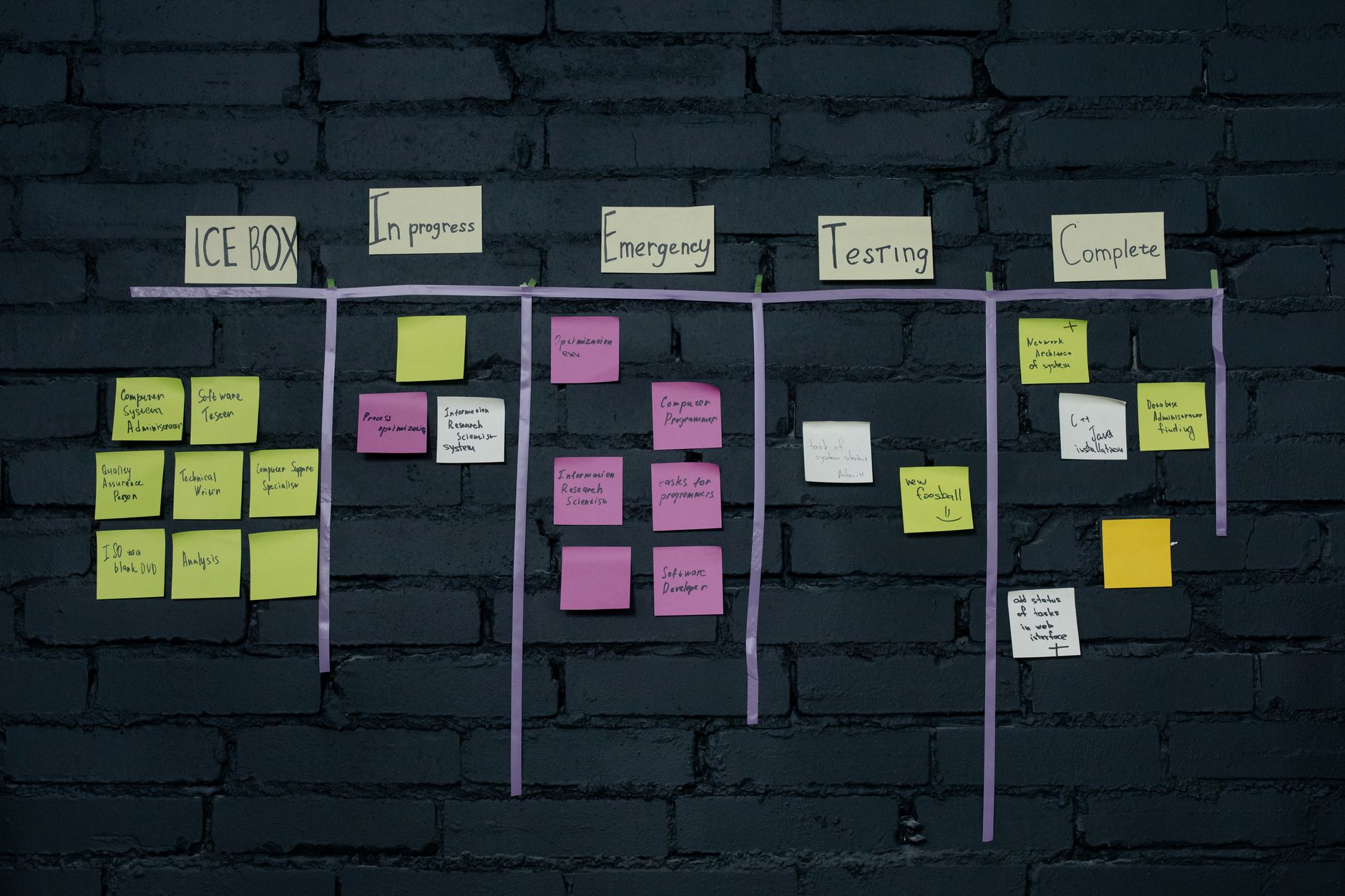
Now work travels a route. A draft goes to review, review goes to approval, approval goes to publish. Different people own different stretches of it, and the thing you need to see is not how many items exist but where each one is sitting and who is holding it.
This is what a board is for. Columns should be the stages you actually have, named after the state of the work rather than the person doing it — "In review", not "Sam".
There is a quick test for whether the route is real: can your team name the columns without arguing? If the names come out as "High / Medium / Low", that is a priority scheme, not a set of stages. Priority is a sort order on a list. Putting it in columns gives you a board whose columns are priorities rather than stages, so it cannot show you which step work is stuck at.
And when items pile up in one column — waiting on legal, waiting on a client — the board is not failing. That pile is the board doing the one job a list cannot do: making a bottleneck impossible to miss.
Shape 3: Deadlines with dependencies
Launches, events, migrations, anything with a fixed date and tasks that cannot start until other tasks finish. Here the count of open items is close to useless. What matters is the chain.
A board can show a dozen cards in progress and still hide the fact that one of them is holding up everything scheduled after it. A list is worse — it flattens the chain into an order that looks like a preference.
The minimum you need is a start or due date on each task and an explicit link to whatever it waits on. That link is what turns a slip into information: when one task moves, you can see what moves with it instead of absorbing the delay with an optimistic nod. If your tool cannot express "B cannot start until A finishes", you are tracking dependencies in your head, and they will stay accurate right up until the week you are busiest.
When your work has more than one shape
This is not unusual, and it does not mean you need one tool that does everything. A workable split: the shared artifact — board or plan — tracks handoffs and dates, because that is what other people need to read. Your own list tracks your next action, because that is what you need to read.
Two views of the same work is fine. Two sources of truth is not. Pick which one is authoritative when they disagree, and pick it now rather than in the middle of a deadline.
A three-question diagnostic
Look at the work actually in front of you, not the work you imagine having next quarter.
- Does anything in this pile wait on another person? If no, stop here — a list is enough. A board is optional from this point, not required.
- Does the work follow the same route every time? If yes, a board with those stages as columns will pay for itself.
- Does one item slipping change the date of another item? If yes, you need dependencies, whatever else you chose.
Who should skip this
- You already ship reliably with what you have. Switching costs the migration and buys you the same output. Leave it alone.
- You have a board you enjoy looking at and no handoffs. Nothing above says you must abandon it — only that a list would be enough. Enjoyment is a legitimate reason to keep a tool. Just don't mistake it for process.
- Your real problem is intake. If more work arrives than can be done, a board makes the overload visible and legible. It does not make it smaller. That is a conversation, not a tool choice.
- You want the tool to make people respond faster. A system can make waiting visible; it can't shorten it.
The next action
Answer question one against your current pile: does anything on it wait on another person? Then move only that pile into whichever shape the answer points at — not your archive, not next quarter's projects. Give it one full cycle of your normal work before you judge it. If you are still reaching for a notepad instead of the tool, you picked the wrong shape, and now you know which two are left.